
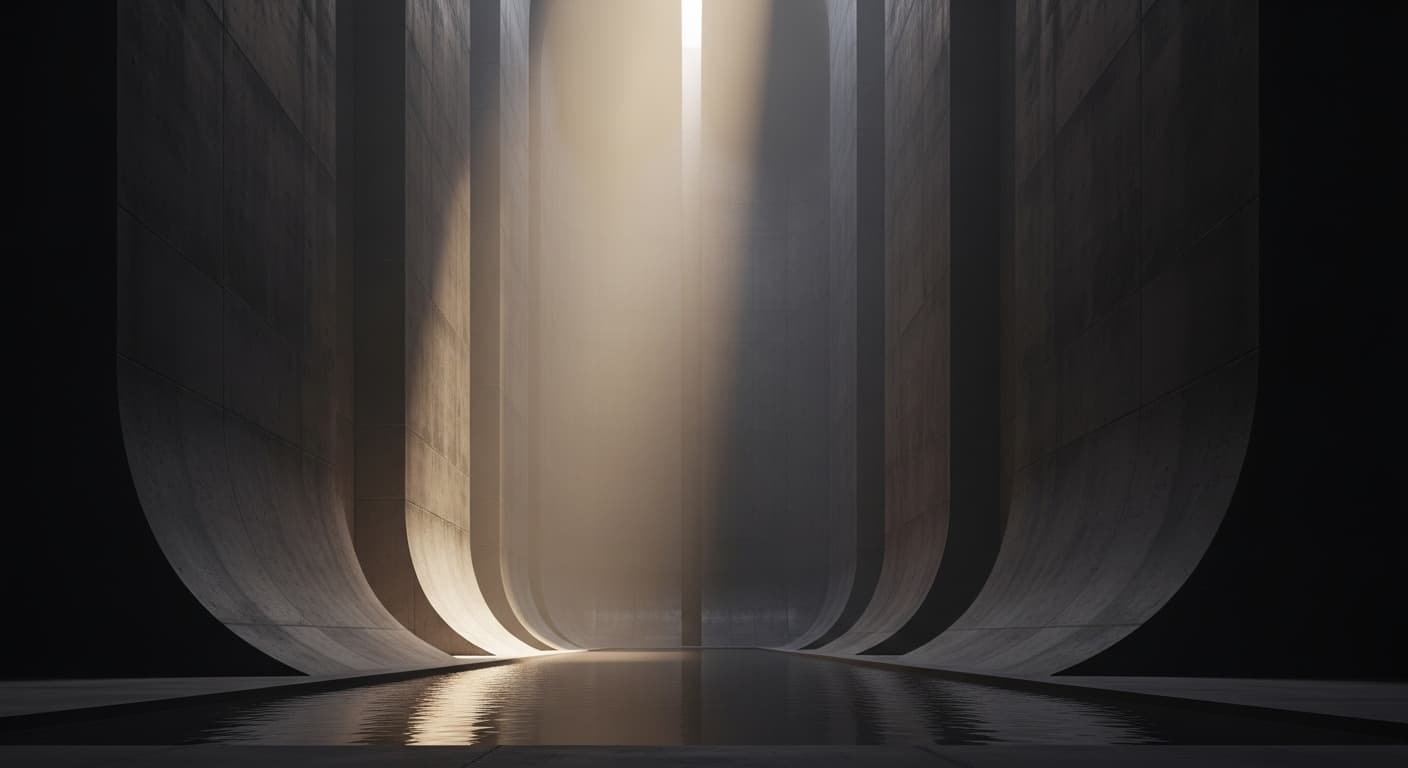
5.1. Spaces as narrative sequences
Every ultra‑luxury environment tells a story, whether intentionally or by accident. The guest enters, moves, pauses, transitions, and exits — and in doing so, they experience a sequence of emotional states. Most spaces allow this sequence to unfold without authorship. The guest wanders through visually impressive rooms that lack emotional progression. The result is an experience that is pleasant but forgettable, coherent in function but incoherent in meaning. Narrative architecture transforms this passive sequence into an authored journey. It treats space as a narrative medium, where each room, threshold, and transition contributes to a larger emotional arc. The environment becomes a story with a beginning, a middle, and an end — not in a literal sense, but in the way it shapes perception, attention, and emotion. The guest does not simply move through space; they move through a world that unfolds with intention. Narrative architecture determines how the guest encounters the environment, how they understand it, and how they remember it. It creates anticipation, discovery, intimacy, and release. It guides without directing. It creates meaning without explanation. It transforms the environment from a collection of spaces into a coherent emotional experience.
5.2. Thresholds, transitions, and emotional pacing
Narrative architecture operates through thresholds and transitions — the moments where one emotional state gives way to another. These moments are often overlooked in traditional design, treated as corridors or circulation spaces. Yet they are the most powerful narrative tools available. A threshold is not simply a passage; it is a shift in atmosphere. A transition is not simply movement; it is emotional pacing. A well‑designed threshold prepares the guest for what comes next. It compresses or expands space to create tension or release. It shifts light, temperature, or acoustics to signal a change in emotional tone. It creates a moment of pause, anticipation, or recalibration. These micro‑experiences accumulate into a narrative rhythm that shapes the entire journey. Emotional pacing is the art of controlling intensity. A space that is uniformly intense becomes exhausting. A space that is uniformly calm becomes monotonous. Narrative architecture introduces variation — intimacy followed by openness, silence followed by resonance, stillness followed by movement. This pacing keeps the guest emotionally present. It transforms the environment into a living sequence rather than a static composition. Transitions reveal whether an environment has been authored or assembled. In an authored environment, transitions feel inevitable — the space guides the guest through atmosphere and rhythm. In an assembled environment, transitions feel abrupt or arbitrary — the emotional logic collapses, and the guest becomes aware of the design rather than the experience.
5.3. How narrative creates identity and guest loyalty
Narrative is the most powerful tool for creating identity because it creates meaning. A space with a strong narrative is not defined by its materials or amenities but by the emotional journey it offers. This journey becomes the signature of the environment — the element that distinguishes it from every other luxury space. It becomes the reason guests return, the reason they speak about the experience, the reason the environment becomes part of their personal mythology. Guest loyalty in ultra‑luxury markets is not driven by points or perks; it is driven by emotional memory. When a guest feels that a space has taken them somewhere — not geographically, but emotionally — they form a bond with that environment. They feel understood, seen, and held. They feel part of a world that exists only there. Narrative architecture creates this resonance by giving the environment a voice. It allows the space to speak without explanation, to communicate its identity through atmosphere, rhythm, and sequence. It creates a world that is not interchangeable, not replicable, not generic. It creates a world that belongs to itself. For operators, developers, and asset managers, narrative architecture is not an artistic indulgence; it is a strategic asset. It increases guest satisfaction, strengthens brand equity, and elevates asset value. It transforms the environment from a product into a destination, from a destination into a signature, and from a signature into a world.
Chapter 5 establishes narrative authorship as a strategic discipline. Chapter 6 expands this logic into infrastructural art integration — the moment where cultural intelligence becomes physically embedded in the environment.