
Art, Architecture, Design
Newsletter series "Constellation". Alexandros Mimoglou presents: Working with the Global Creative Industry
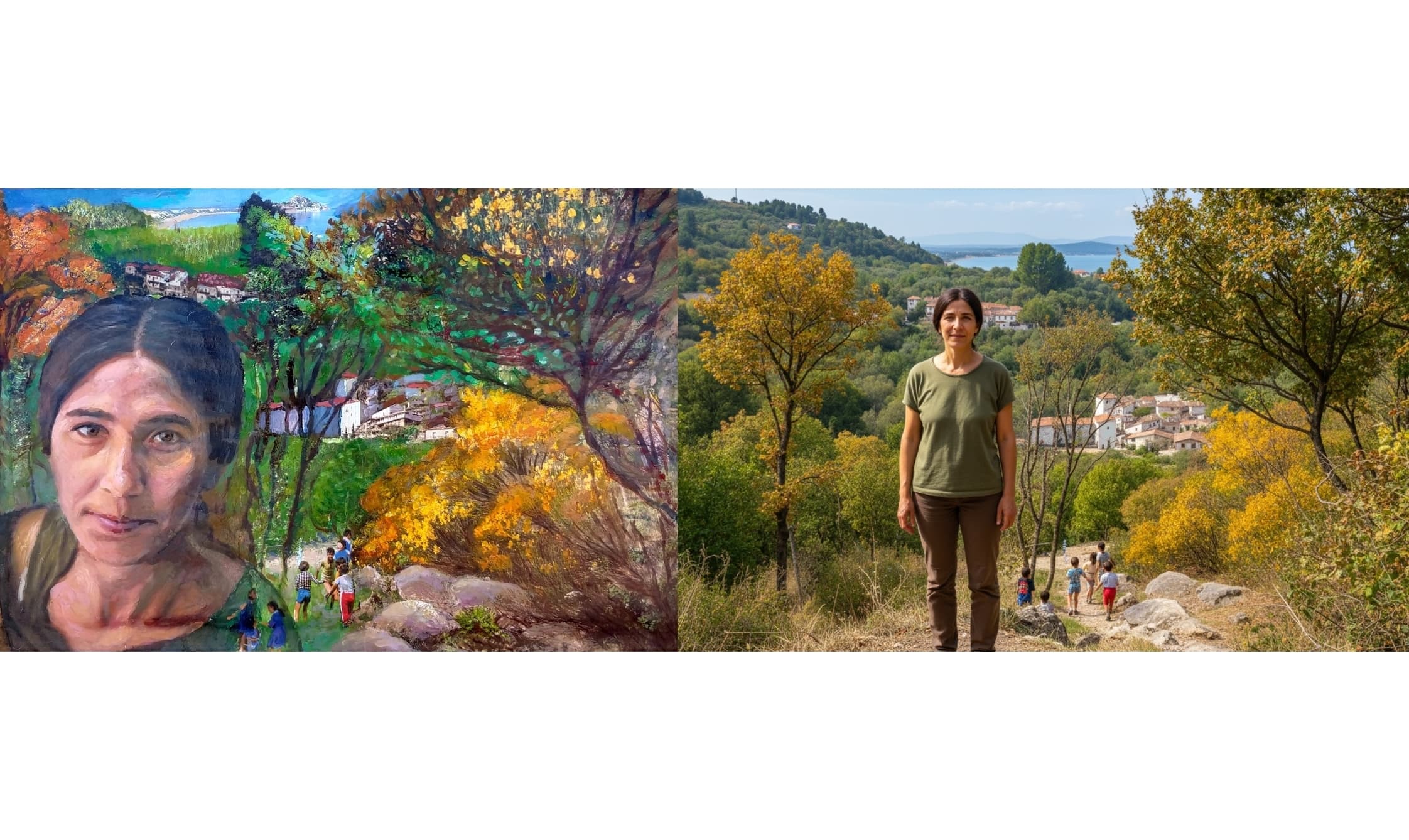
Constellation #77. Art as the Generative DNA of Performative Artworks™
Alexandros Mimoglou
October 16, 2026
A new artistic territory in which an existing artwork acquires a second, time-based life.
Visual art has always travelled beyond its original material condition. A painting becomes a print, a photograph becomes a book, a drawing becomes an object, a sculpture enters architecture, fashion, film or digital space. When that passage is governed by a genuine artistic decision, the result can become more than reproduction. It can become another work.
Artificial intelligence and contemporary digital technologies now make another passage possible. An existing artwork can become the generative source of a new artwork in time.
EURAN calls this a Performative Artwork™.
The distinction matters. We are not referring to the increasingly familiar animation of famous paintings, in which figures begin to walk, horses move through a landscape or skies acquire motion. Such experiments can be technically accomplished and visually engaging. But movement alone does not create a new artistic proposition.
A Performative Artwork begins with a more consequential question: What already exists inside the original artwork that has not yet been released into time?
THE ARTWORK CONTAINS MORE THAN ITS IMAGE
Every artwork carries an internal logic. Composition, colour, gesture, scale, rhythm, tension, atmosphere, spatial relationships and narrative possibility already establish a particular artistic universe before anything begins to move. EURAN describes this internal structure as the work's Artistic DNA.
The purpose is not to decorate that DNA with technology. Nor is it to ask an algorithm to invent an unrelated spectacle around an existing image. The purpose is to understand what makes the artwork itself distinct and to allow that logic to become the generative material for another artistic state.
A figure may remain completely still while the world around it changes. A horizon may acquire duration. A relationship that was implicit in the original composition may unfold through time. Light, sound, perspective, scale or distance may acquire dramaturgical importance. An environment previously contained by the limits of a canvas may continue beyond the frame.
The new work therefore does not simply animate its source. It extends its artistic logic into time, movement, sound and space. EURAN calls that creative passage the Performative Extension.
The Performative Extension is neither a visual effect nor the final artwork. It is the artistic process through which the source work can generate another work. The result is the Performative Artwork.
NOT A DIGITAL TWIN
Contemporary technology frequently uses the expression digital twin to describe a virtual counterpart of a physical object. In engineering, architecture and industry, the objective is generally correspondence: the digital entity reflects, simulates or reproduces characteristics of the original.
Art requires something else. A Performative Artwork is not a twin because it is not attempting to duplicate the source. The original painting, drawing, photograph, sculpture or digital work remains what it is. The new work acquires another material and temporal condition. The relationship is therefore not duplication, but artistic lineage. One artwork becomes the generative source of another.
The distinction is fundamental. The original does not disappear, nor is its value transferred to a digital substitute. It remains the source work. The Performative Artwork becomes a second artistic state: connected to the first, recognisably descended from it, but possessing its own artistic existence.
AUTHORSHIP DOES NOT DISAPPEAR WHEN THE MEDIUM CHANGES
When the source artist is living, direct collaboration offers an especially powerful possibility. The artist can participate in defining how the work may expand into another medium and how the essential characteristics of its artistic language should be protected. But Performative Artworks are not restricted to works whose creators are still present.
Artistic culture has always developed through interpretation, transformation and dialogue with earlier works. Cinema, literature, music, fashion, architecture and contemporary art continuously create new works in relation to artistic worlds that already exist.
The same principle can apply here. The source artist remains the author of the original artwork. The creator or creative team responsible for the Performative Extension authors the new artistic contribution, while the precise authorship and rights structure of each project is defined according to its collaborators, agreements and the applicable rights, permissions and attribution connected to the source work.
That distinction opens the field to contemporary artists, estates, archives, collections, museums and historical works without confusing the authorship of the source with the authorship of what comes afterward.
EURAN's methodology protects that relationship through a Transformation Charter. The Charter defines the artistic freedoms and limits of the new work in relation to its source: not as a bureaucratic restriction, but as part of the artistic conception itself. The question is not simply what technology can do. The question is what the new artwork should do.
AI IS PART OF THE MEDIUM
Artificial intelligence matters here, but it should not occupy the centre of the conversation. Painters do not begin by selling paint. Filmmakers do not begin by selling cameras. Sculptors do not ask us to admire electricity because machinery participated in fabrication. Technology becomes interesting when someone gives it artistic purpose.
Within a Performative Artwork, AI may contribute to movement, continuity, image transformation, spatial development, sound, virtual environments and other temporal dimensions. Projection, immersive systems, digital environments and technologies still to come may equally become part of the work. They are not the artistic idea. They are contemporary means through which the artistic idea acquires another form.
That distinction moves the discussion away from the increasingly vague category of “AI art” and towards something more durable: artistic creation in which technology becomes part of the medium rather than the reason for the work to exist.
A SECOND ARTISTIC STATE
The most significant consequence may be that a visual artwork no longer needs to exist in only one state. The original may remain on a wall, in a studio, in a private collection, an archive or a museum. Its Performative Artwork may exist elsewhere, encounter another public, occupy another architecture, operate at another scale and circulate through entirely different environments.
A small painting may generate an immersive work without ceasing to be a small painting. A drawing may generate a time-based artistic experience. A sculpture may acquire changing sound, light and spatial relationships. A collection may become the source of an entire performative universe. The original remains the source. The Performative Artwork becomes its second artistic state.
This creates a new territory for artists, collections and institutions because artistic circulation no longer depends exclusively on moving the physical object. The new work can travel independently, be presented in different contexts and develop authorised manifestations while preserving its relationship with the source. That is more than a technological convenience. It introduces a new artistic economy around the continuing life of an artwork. The source can remain singular while the artistic universe around it expands.
FROM ONE WORK TO AN ARTISTIC UNIVERSE
The proposition becomes more significant still when it extends beyond a single artwork. An artist's broader body of work may contain recurring structures, figures, landscapes, colours, gestures or narratives. Together they can reveal a larger Artistic DNA from which several Performative Artworks may emerge.
A collection can therefore acquire another life without becoming a catalogue of animated images. An archive can become a source of new artistic production. A museum can commission a performative interpretation of works already under its stewardship. A living artist can develop an entirely new branch of practice alongside painting, sculpture, photography or another existing medium. The concept is deliberately open. It does not belong to one generation, one aesthetic, one technology or one type of creator. Its only serious requirement is artistic intention.
A NEW INSTRUMENT OF THE EURAN CULTURAL OPERATING SYSTEM
Performative Artworks now joins the EURAN Cultural Operating System — COS™ as a new artistic instrument. Within COS, EURAN has already developed methods for translating artistic intelligence beyond the conventional limits of an artwork: into space, design, communication and institutional logic. Performative Artworks introduces another dimension: It takes Artistic DNA into time.
But time is only the beginning. Through time come movement, sound, spatial development, dramaturgy and the possibility of encounter. The work does not merely occupy a new medium; it acquires another state of existence.
This gives Performative Artworks a particular position within COS. Other instruments translate artistic logic into another field. Here, artistic logic generates another artwork. The conceptual movement is therefore direct: ARTWORK → ARTISTIC DNA → PERFORMATIVE EXTENSION → PERFORMATIVE ARTWORK. Between those points lies the real work: artistic judgement. That is precisely why this is not a technology demonstration. It is art.
THE NEXT WORK
EURAN is opening conversations with artists, estates, collections, galleries, museums and cultural organisations around the commissioning, co-production, presentation and circulation of Performative Artworks derived from existing works and artistic bodies of work. We are not looking for images to animate: we are interested in the far more consequential question of what another artistic state can become. For Performative Artwork projects and collaborations: management@euran.com
The original remains. A new artwork begins.
Alexandre Mimoglou, EURAN European Art Networks
Paris, France
Artwork: Maria Papafili, AI by Alexandros Mimoglou.
Copyright Notice: This newsletter’s content is the intellectual property of Alexandros Mimoglou and is protected by copyright laws. Sharing for promotional purposes is encouraged, provided proper credit is given (e.g., "LinkedIn Newsletter by Alexandros Mimoglou"). For commercial use or any use beyond personal viewing, please contact Alexandros Mimoglou for licensing.